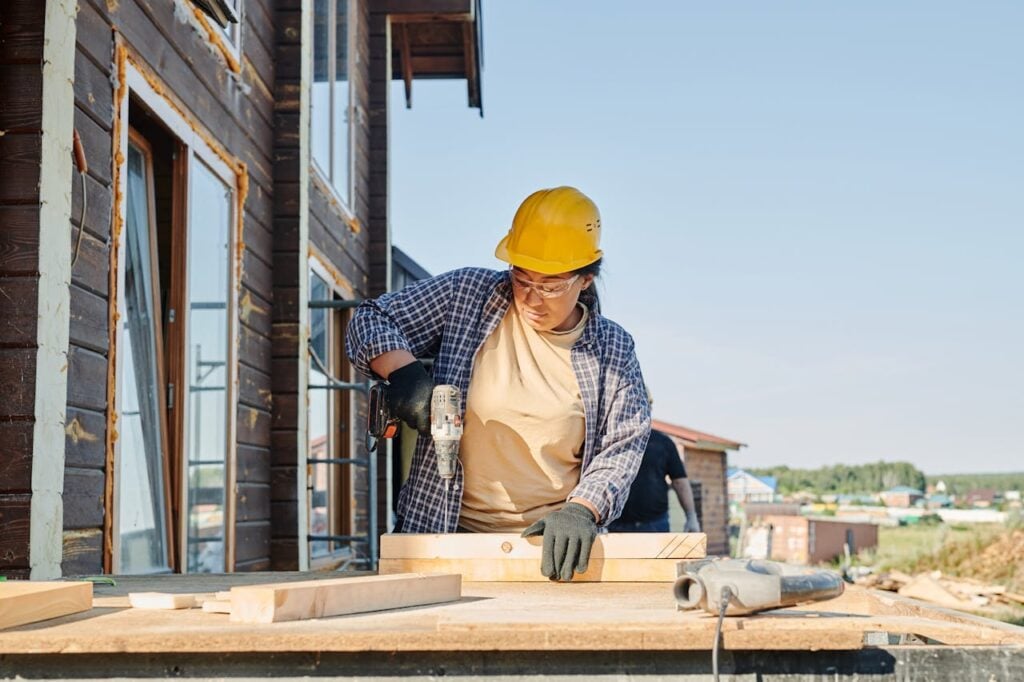
When you spot a problem in the exterior of your home, you might be tempted to roll up your sleeves, get your overalls on, and try a DIY fix of your own.
And we’re all for that! It’s a great skill to have, and you’re well within your right to flex your repair muscles. But if you’re a DIY beginner, exterior repairs will be quite the challenge. You’ll need to go into a job with the right mindset, tools, and a bit of expert knowledge on your side.
And while we can’t quite provide the first two, we can certainly set you up for success with the latter. Here’s how to approach exterior DIY repairs when you’ve only just bought your first ever power tool.
Understand What the Signs Mean
Every exterior DIY repair is two thirds knowing what you’re dealing with. That’s why it’s crucial to understand the ‘signs’ that have cropped up. You need to know what they might indicate.
Let’s say you’ve seen some darkened paint or plaster on one side of your house. It might not be normal wear and tear. It could actually be water damage setting in, and that needs a whole more correction than just a fresh coat of paint.
Clean & Dry an Area Before Working on it
Clean and dry is the best kind of surface to work on. If you’re going to patch over a dent in your driveway with some asphalt millings, make sure you’ve removed as much grime, dirt, and moisture as possible.
You don’t want to be working in the dirt and wet, firstly, but you also don’t want these elements ruining the fix job you’ve applied. And if you need to wait for something to dry, you certainly can’t let rain and run off get to it first! That’s why you should always aim to do an exterior DIY repair on a sunny day!
If There’s a Crack, Inspect Before Fixing
Cracks can be a lot deeper than they appear. It might seem like an easy job to just fill them in and be done with it, but that could only address the literal surface-level symptom.
Your home could have a structural issue going on much deeper, and that’s easily missed by both beginner and expert DIYers alike. A tiny, hairline kind of crack probably doesn’t mean anything other than that bit of plaster or brick has some damage to it. Fill it in, patch it over, think no more of it.
But if more than one crack appears, or the crack is larger than you’re used to seeing, it’s worth getting a proper property inspection done. Unless you have the tools for checking if there’s an issue with the inner walls, cavities, foundation, or even the roof, you might not pick up on the bigger problem at hand.
Want to fix up your own exterior property issues? Go for it! Just make sure you have an idea of what you’re dealing with!

Leave a Reply