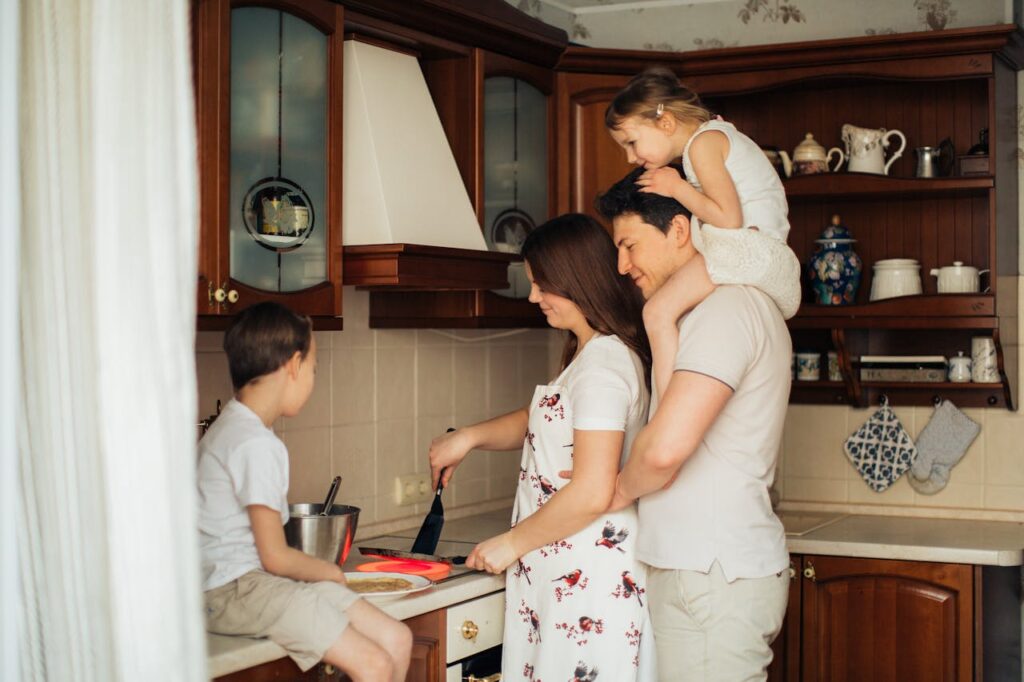
Home is one of the few concepts that follows us through every stage of life, yet it rarely means the same thing twice. What we expect from a home shifts as our priorities, responsibilities, and sense of self evolve. Understanding these changes helps people make more thoughtful decisions without clinging to outdated ideas of what home is supposed to be.
This evolution is not about loss. It is about refinement. Each stage adds a new layer of meaning that builds on the last, reshaping how we relate to the spaces we live in and why those spaces matter.
This blog post is going to take you through the different stages and explore how the idea of home adapts alongside personal growth, changing relationships, and shifting needs. Rather than treating home as a fixed destination, it looks at it as a living concept that responds to each phase of our lives.
Home As A Starting Point
In childhood, home is something you inherit rather than choose. It is shaped by the people who live there, the routines that repeat daily, and the emotional tone set by caregivers. Stability matters more than design or location, even if you only realize that later.
At this stage, home functions as an emotional anchor. It teaches you what comfort feels like long before you have language for it. Even years later, many people measure new spaces against this early sense of familiarity, often without realizing it.
Home As Self Expression
As independence grows, home becomes a personal experiment. First apartments and early houses are often imperfect, but they feel significant because they reflect choice. For the first time, home mirrors identity instead of authority.
This is when preferences start to matter in a deeper way. Layout, finer details, neighborhood, and atmosphere become part of how someone sees themselves and how they want to be seen by others. Home shifts from a fixed environment into a flexible extension of personality and values.
Home As A Center Of Daily Life
Midlife often turns home into a hub rather than a retreat. It supports careers, relationships, family routines, and constant movement in and out of the door. Practicality quietly overtakes aesthetics, even for people who once cared deeply about style.
People begin paying attention to how a space functions under pressure. Storage, proximity to work or schools, and ease of maintenance take on new importance. Home becomes a system designed to support busy lives rather than a place to escape from them.
Home As A Place Of Connection
Beyond its physical function, home also becomes a social anchor. It is where relationships are maintained, traditions are repeated, and shared experiences take shape. Over time, the people invited into a home can matter as much as the structure itself.
This phase often brings a renewed awareness of how space affects connection. Seating arrangements, privacy, and flow begin to influence how people interact. Home quietly supports conversation, rest, and moments that might otherwise be missed.
Home As A Tool For Independence
Later on, the meaning of home often pivots again. Throughout your life, this will happen a lot. Independence remains important, but the definition changes. Instead of doing everything alone, independence becomes the ability to live on one’s own terms without unnecessary disruption.
This is where intentional planning matters most. For some, staying in a familiar space while adding support such as safety and assistive measures or in-home senior care allows daily routines, community ties, and personal comfort to remain intact. In this phase, the home itself becomes an active partner in maintaining quality of life rather than something that must be traded for convenience.
Home As A Keeper Of Memory
As time goes on, home begins to hold more memory than ambition. Familiar sounds and smells, worn furniture, and well-known views carry emotional weight that cannot be replaced. Change becomes less appealing than continuity.
At this stage, home is valued for how it feels rather than how it performs. It offers reassurance through recognition and predictability. Even small details can provide a sense of grounding that newer spaces often struggle to recreate.
What This Evolution Reveals
The changing meaning of home reflects changing needs, not decline. Each phase represents a shift in focus from growth to expression to sustainability. When people understand this, decisions about housing feel less reactive and more intentional.
A good home is not defined by size, trend, or permanence. It is defined by how well it supports the life being lived inside it at any given moment. When we allow home to evolve with us, it continues to serve its purpose at every age.

Leave a Reply