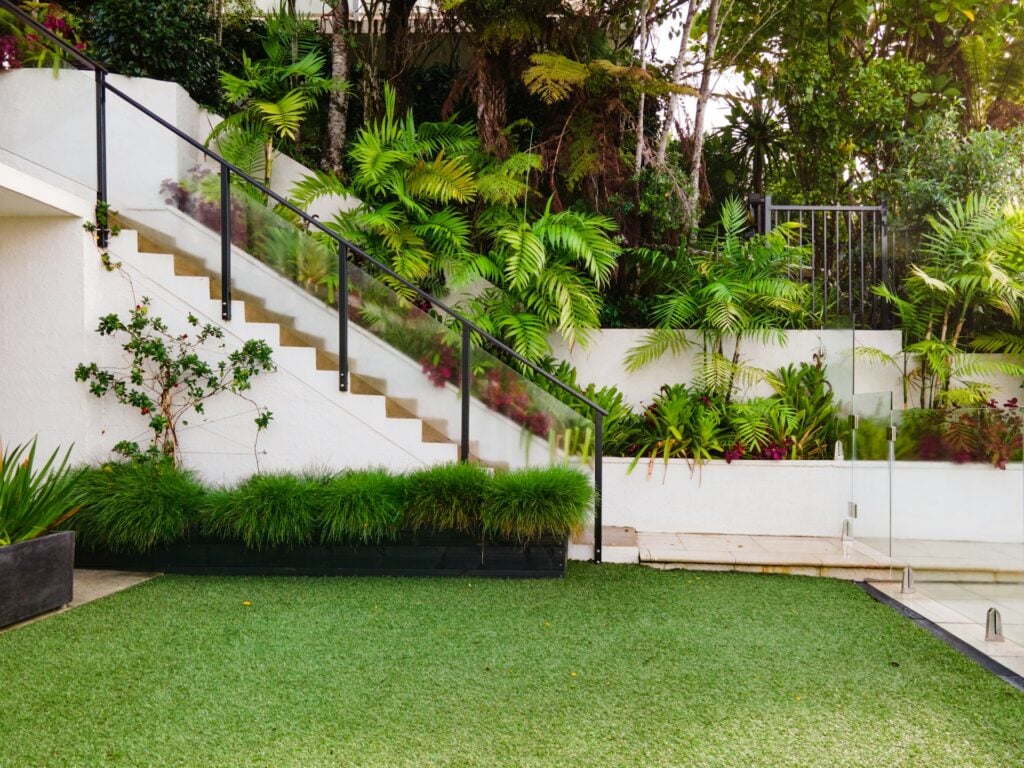
Garden slope management can have many unique challenges, yet with the appropriate techniques it can become spectacular, functional and eco-friendly landscapes. Steep inclines don’t need to cause stress, instead they provide an opportunity for creative landscaping solutions. In this blog, we will look at different ways of controlling sloped gardens and elevating your outdoor living space.
Terracing for Structure and Stability
Terraces are a great means for managing sloped gardens, as they create flat, level sections that enhance functionality while helping prevent soil erosion. You can build a retaining wall out of natural stones, timbers or concrete blocks, providing a solid foundation and aesthetic appeal for terraces in your garden. Staircases or pathways can further access these terraces for better flow throughout your garden space. Terraces make it easier to create planting zones, where different layers can host various species that thrive under specific environmental conditions. Hardy drought-tolerant vegetation or perennials with deep root systems are a great way to anchor the soil and lower maintenance needs.
Ground Covers to Tackle Erosion
One of the biggest challenges associated with sloped gardens is soil erosion. Fast-growing and low maintenance ground covers can be a good way to mitigate this erosion problem. Especially creeping thyme, vinca, and sedum varieties that thrive on inclines can quickly cover an entire slope with lush carpets that stabilize its ground surface while adding beauty.
Creeping thyme varieties are particularly effective as their foliage colors, textures, blooms add visual interest while their practical use provides stability. Also native plants provide excellent erosion control solutions with minimal upkeep or watering needs making them eco-friendly additions to sloping gardens.
Create a Rock Garden for Low Maintenance Charm
Rock gardens offer a good way to beautify sloped areas without incurring additional maintenance expenses. When you strategically position large boulders and smaller rocks on hills, rock gardens provide aesthetic value while helping reduce erosion naturally. Colorful drought-tolerant plants such as succulents, ornamental grasses or lavender between rocks add color and depth as well as help secure slopes against further erosion. Rock gardens can provide low-maintenance solutions suited for harsh weather conditions. Rock gardens make an attractive and low maintenance garden design feature when created alongside sloped areas where erosion may otherwise happen.
Add Water Features for Impact
Take full advantage of your slope’s natural gradient by installing gravity-fed water features such as cascading ponds or streams to add serenity and dynamic movement to any garden. Water features also serve to draw attention to specific areas while simultaneously making everyone relax. Creating focal points that are visually and audibly soothing. Careful strategic planning may be required in order to successfully implement such an impactful installation in order to achieve practical yet stunning slope.
Changing sloped garden terrain from unruly to extraordinary requires thoughtful planning and creativity. From terracing for added structure, planting erosion-controlling ground coverings or installing dramatic water features, there is an infinite number of strategies that can change sloped gardens from chaotic into stunning landscapes, proving even steep inclines have potential worth tapping.

Leave a Reply