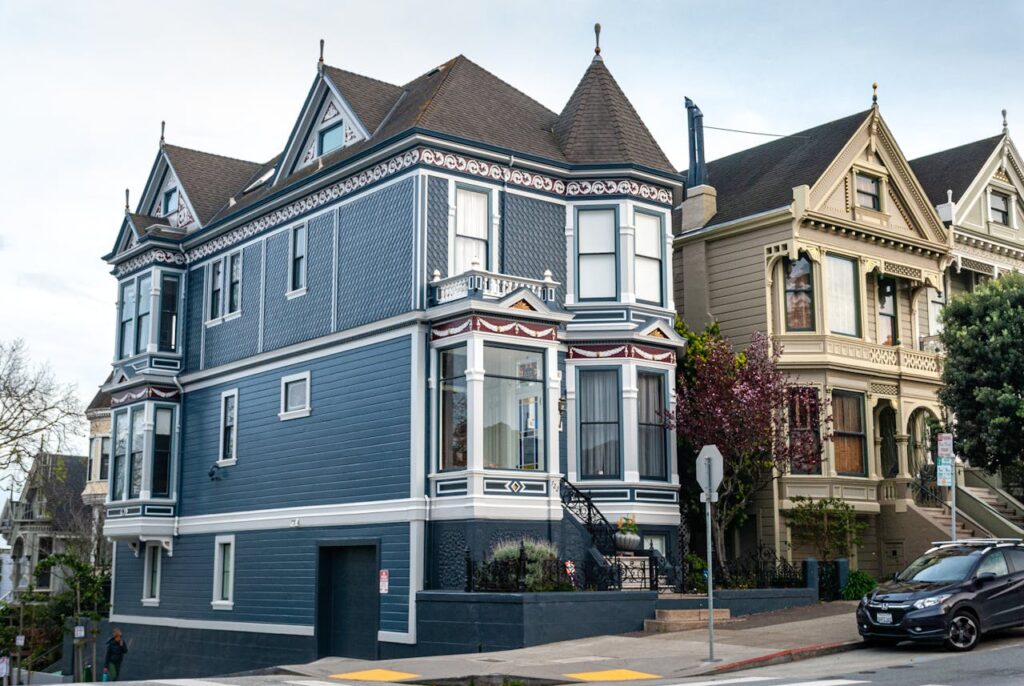
There’s just something about an older house that hits in a different way, right? So, unlike modern-day homes, it’s just so much easier to make an older house feel like a home; there’s just a charm to it, thanks to it being lived in. Like, there’s the cute wrap-around porches with the swing, the not-perfect-but-cute windows, the roofline that doesn’t look like every copy-paste new build down the street. And the gables, you can’t forget about the adorable gingerbread gables that basically only look good on older houses!
Basically, it feels like the house has an actual personality, not just a floor plan. So, when you’re shopping for a house, by all means, here, it’s so easy to fall head over heels in love with the listing, all the pictures, all of that. It makes sense, but at the same time, the listing, well, the pictures don’t paint the full story. The whole point of a listing is to highlight the best bits; that’s it, and then you see the house for yourself.
So, if the area you’re moving to is known for nasty weather, well, older homes tend to show that off wya more than newer homes do. So here are some things to keep in mind during house shopping.
Why Older Homes in Harsh Weather is Terrifying
So, for starters here, older homes in rough climates can be absolute gems. Like, a lot of them were built with solid materials, real craftsmanship, and details that newer builds don’t even attempt. You get character, mature trees, streets that actually feel lived in, and sometimes bigger lots. So yeah, the appeal is very real, and it makes total and complete sense to yearn for that. But of course, that same house has seen every hailstorm, every blizzard, every wind event, tornado, you name it, moment since it was built decades ago.
So, the roof has taken hit after hit. The siding has been soaked and dried a thousand times. The windows have rattled through storms that are not even in the weather app history anymore. That kind of life leaves marks. Some of those marks are fine, just aging gracefully. Some of them are red flags, but it just depends on what it is, obviously.
You Have to Start with the Roof
Okay, like, in a stormy area, the roof is the first thing to eyeball, even from the driveway. Yes, you won’t be able to see much unless you somehow bring a drone and get permission, but good luck with that. Anyways, nobody’s doing a full inspection during a showing, obviously, but there’s a lot you can spot with regular human eyes. So, just look at the overall shape. Does the roofline look straight, or is there a sag in the middle that makes you tilt your head? A little wave in older homes can be normal, well, big dips can hint at deeper issues (like really bad issues).
But after doing that, it’s going to be a pretty good idea to then look at the shingles. Are they lying flat, or are they curling, cupping, or lifting up like they’re trying to eject themselves? Why does this matter? Well, it’s because hail can leave bruised, bare-looking spots where the granules have been knocked off. Sure, it’s normal for hail to do some damage, just like it’s normal for strong winds, be it hurricanes or tornadoes, to do some damage too, but what type of damage, and has it already been fixed? That’s what you want to know.
Actually, mismatched patches are another clue, like if it has that weird patchwork quilt sorta design, that means something’s going on, because there needs to be a more uniform look to it all. For some homebuyers, they’re fine with some damage; they’re fine with hiring professionals like Bumble Roofing to come in and do a full roof replacement if they buy the house (especially given the fact that every 20 to 30 years, a roof needs a full replacement anyway).
But yeah, overall, just inspect what you can, and ask questions, and if things get serious, hire an inspector before buying said house.
How About the Siding?
It’s so much easier to look at this than you can a roof. So, now, moving down the walls, siding in a storm-prone area has seen some things. Usually, vinyl, wood, fiber cement, whatever it is, weather has had its hands on it. So yeah, walk around and really look, not just for color, but for shape and condition. Here’s a good example, if it’s vinyl, it’s a bad since if there’s waves in it (be it bad installation or heat). If it’s wood, well, peeling paint, dark stains, or soft areas under that paint can be hinting at slow, long-term moisture issues instead of just “needs a fresh coat.” That’s actually a major one to keep an eye out for. Well, and for all materials, it’s really bad if moss or algae is on it.
Basically, Anything Paint Tries to Hide
Alright, so paint, well, trying to hide siding problems with paint was just mentioned, but it helps to go more into this because the interior and exterior of a house, well, any house, this is an issue. Actually, even when it comes to people trying to find a place to rent, this is an issue. But for the most part here, paint seems to be everyone’s favorite cover-up, but it can only hold the secret for so long.
If there are cracks that keep showing up through multiple layers, or trim that looks lumpy and swollen under a fresh coat, it might not just be “old house character.” It could be mold, as a lot of people try to paint over mold (but mold is obviously still there, of course).
How About the Windows?
As you already know, older homes and older windows go hand in hand, and those windows are basically weather historians. Yeah, that kind of sounds cute, doesn’t it? Well, when you’re viewing a house, try and look at some of the windows, not just the sild from the inside, but the outside too. But yeah, check the corners, the lower edge, the upper ones, you get the idea here. The main things you’re wanting to look for here are warped wood, mold, discouraging, dark colors, chipped paint, those sorts of things.

Leave a Reply