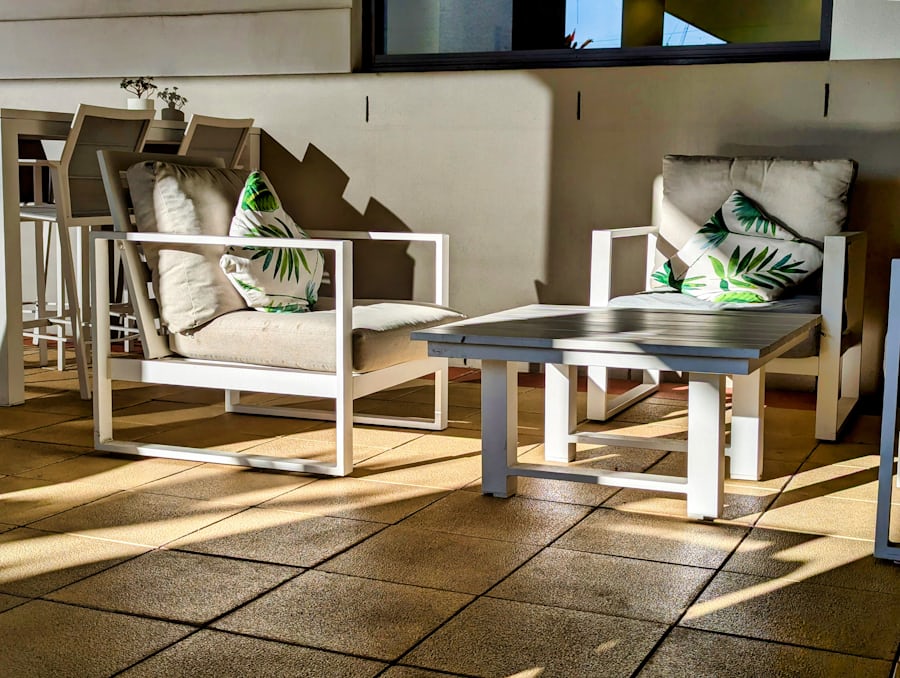
The patio isn’t really inviting you to hang around. The chairs don’t seem like they belong. There’s a separation between the house and the garden. Patio exists, however, it doesn’t feel lived-in. Even a slight disconnection matters because your outdoor space needs to feel like it’s another room, just with fresh air.
Begin with Your Real Habits
Think about what you are doing now at home (not what you wish you were doing). Are you eating outdoors when it’s warm? Do you need a quieter spot to read while the kids are playing? Do you mainly just want somewhere to sit with friends after dinner?
It makes it much easier to define your outdoor living space when it relates to how you actually spend time at home. For example, a smaller bistro-style table close to your kitchen would likely be a lot more useful than a larger dining setup all the way across the back of your property. Shaded benches can contribute greatly to your day-to-day existence, rather than trying to create an entire entertaining area.
Connect The Dots Between Inside & Out
The most obvious way to get your outdoor living space to feel connected is by repeating some of those same elements in both spaces. These can include: colors, textures, and moods. For example, if your interior space is soft and calming, continue this feel in the exterior with natural fiber cushions, wood tones, and minimalistic planters. If your interior space has a brighter, more playful feel, express these characteristics with outdoor fabric choices or colored ceramic planters.
You can also take into account what view you have from the inside of your home. What do you see as soon as you look through the doorway or window? Does it immediately capture your attention? Is it a nice sitting area? A thoughtfully placed planter? Or perhaps a softly lit walking path? Any of these items can help you connect the dots and make the outdoor area feel more like it belongs with the rest of the home, even before setting foot outside.
Make Comfort Easy
Comfortable outdoor living is not limited to aesthetically pleasing furniture. It is defined by many factors, including shade, proper drainage, wind direction, privacy, and ease of moving throughout. If direct sunlight hits your patio too harshly, you probably won’t venture out to enjoy it. Similarly, if standing water accumulates during heavy rainfall events, the space will become less comfortable. And lastly, if there is no convenient location to set down a drink, you’ll rarely find reason to linger.
This is why planning is so important. Regardless of whether you decide to tackle this project alone or hire someone else (like the guys at NatureWorks Landscapes), the ultimate goal is to resolve those minor issues that subtly influence how frequently you use this space.
Softening the Space
After establishing functional elements of the space, add softer touches. Outdoor throw pillows that can be easily washed. Potted plants that are positioned at various levels. Blankets available for cooler evening hours. Lighting that is placed strategically where social gatherings occur rather than strictly along pathways.
None of these added elements necessarily requires a significant financial investment. They simply need to convey that the space has been “tended” to.
As soon as your outdoor living space aligns itself with how you currently live, you begin to treat it as one entity instead of two separate ones. You start opening doors more regularly. And eventually, it begins to feel like part of your overall home.

Leave a Reply